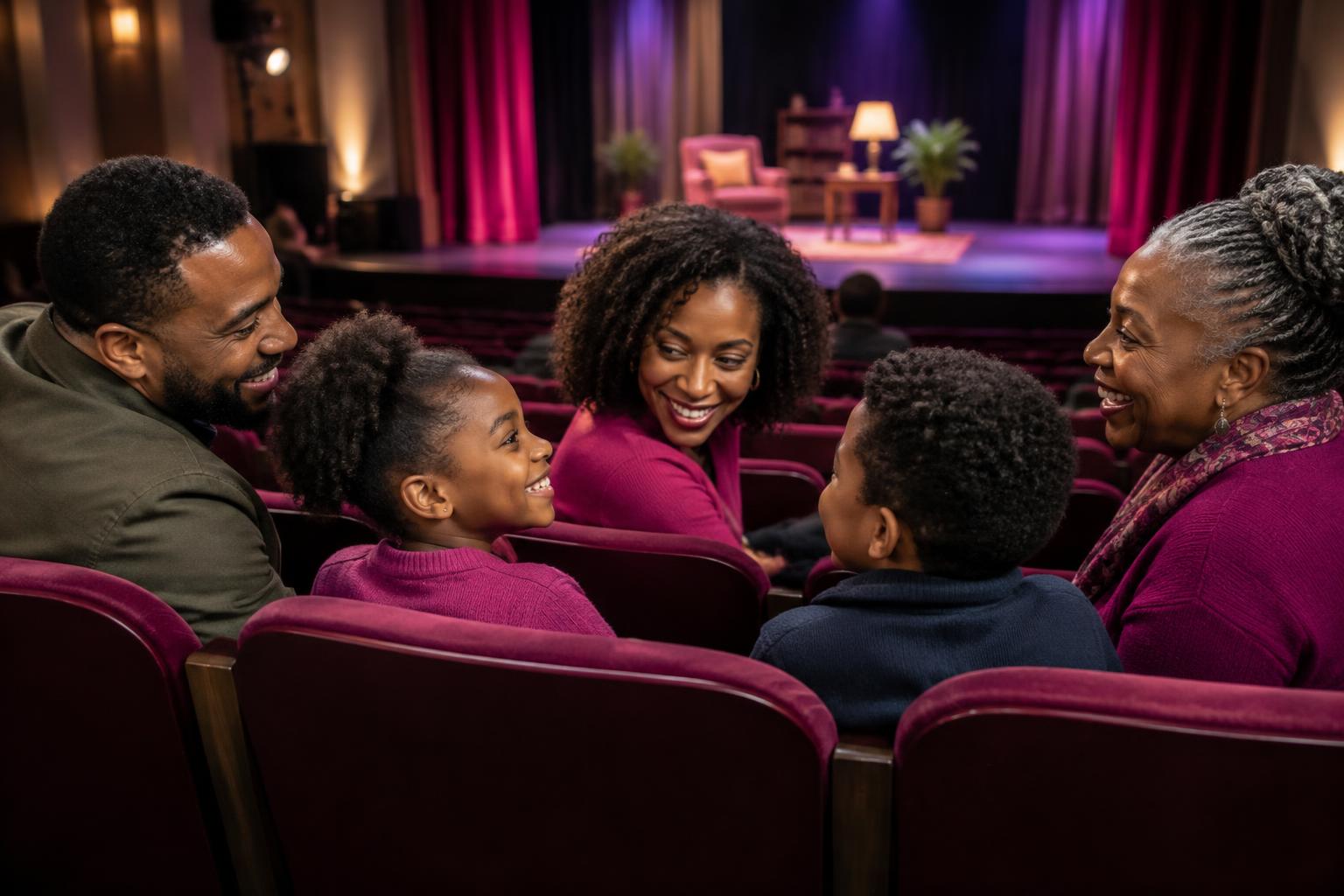
Introducing Children to Dance and the Arts Through Shared Experiences
Start with children’s interests, explore different creative formats, and make room for individual preferences and shared curiosity.
 Event inspiration
An arts experience with a child does not have to begin with a formal performance or a detailed explanation. It can start with a rhythm they already enjoy, a question they ask, or a chance to watch something unfamiliar together. The aim is to share an experience and notice what catches their attention, without requiring a particular response.
Dance and the arts take many forms. Families can watch, listen, move, make, and talk. There is no single best introduction for every child. Interests, age, comfort, and personal preferences can help you choose a starting point that feels inviting rather than pressured.
Start with existing interests
Think about what your child gravitates toward in everyday life. Do they invent dances, notice costumes, ask how objects were made, or enjoy hearing stories? Perhaps they like patterns, music, big movements, or quiet observation. These interests offer a natural bridge to another creative experience.
Invite a simple choice: a song for a family dance break, a story to share, or a type of performance to learn about. Listen to the response instead of deciding in advance what the activity should mean. Interests can change, and a child does not need to demonstrate lasting enthusiasm to enjoy one moment.
Avoid assuming a child who dances at home wants to perform publicly, or that a quiet child will not enjoy a live event. Familiarity, watching, and participation are different things.
Explore different creative formats
Experiencing the arts does not always mean going onstage or joining a class. A child can engage by watching movement, noticing sounds, making something, or talking about a story. An outing might involve an exhibit, a performance, or an age-appropriate community activity, once its details have been confirmed.
At home, short activities can offer another starting point: listening together, making up movements, drawing something noticed during an outing, or sharing a favorite moment. Keep the activity optional and manageable rather than turning it into a task with a correct answer.
Our Suites & Experiences page explores different ways families can encounter creative expression. The family arts outing guide can help with practical arrangements when you are ready to go somewhere.
Choose between watching and participating
Some children are eager to join in; others prefer to observe first. Both are valid ways to experience an activity. Explain whether participation is expected, invited, or entirely optional before choosing a particular format.
If audience participation is part of an event, check what that actually involves. Do not promise a child can watch without participating unless the organizer confirms that choice. If participation is optional, let the child decide how much feels comfortable, and respect a no.
Watching can be an experience of its own. A child may focus on music, clothing, the setting, or a moment you did not notice. You do not need to direct their attention to the same details that interest you.
Check age suitability and practical details
For community experiences, read the official description and any age guidance. Check format, length, supervision requirements, participation expectations, and admission rules. Suitability depends on the particular activity and the child, not simply a broad family-friendly label.
Consider timing, transportation, total cost, seating, and opportunities for breaks. If a hands-on activity involves materials or movement, ask about clothing or other practical requirements. Confirm details directly with organizers instead of treating an informal description as complete.
Do not assume a local experience is free, that equipment is included, or that adults can participate alongside children. Check before making plans.
Consider sensory and accessibility needs
Families may have different preferences around sound, lighting, crowds, movement, or unfamiliar spaces. Review available information and ask specific questions when those details matter. Accessibility and sensory supports vary by organizer and activity.
Confirm what is available, whether arrangements need advance notice, and any limitations. A quiet break space or alternative format should never be assumed. Check policies for leaving and returning if your family may need to pause.
Pack ordinary essentials according to venue rules and keep the day flexible. Planning can reduce uncertainty without guaranteeing a particular reaction.
Encourage questions and individual preferences
Ask open questions such as “What caught your eye?” or “What would you choose next time?” Give children room to answer briefly, draw, demonstrate a movement, or say they are unsure. There is no need to quiz them or require a positive review.
Share your own observations without presenting them as the right interpretation. Different family members may enjoy different parts. A child who dislikes one format may be interested in another, or simply prefer to wait before trying again.
Respecting preferences keeps cultural discovery personal. The goal is not to persuade every child to like every art form.
Make cultural discovery repeatable
A shared experience does not need to be a major occasion. Choose a pace that fits your household’s budget, schedule, and energy. Familiar activities and occasional new outings can both have a place, without requiring a packed calendar.
After each experience, note what made the day manageable and what you would adjust. Perhaps a shorter activity, earlier start, or more unstructured time would suit your family. Use those observations for future choices rather than treating one outing as a verdict on the arts.
A family discovery checklist
- Start with something the child already enjoys.
- Offer a manageable choice of formats.
- Clarify watching and participation expectations.
- Check official age guidance, cost, length, and policies.
- Confirm sensory and accessibility information directly.
- Make room for questions, breaks, and different reactions.
- Choose a repeatable pace that fits your family.
Explore more ways to experience the arts together. Connect with IHM3 Events about your interests and the shared experiences you would like to consider.